
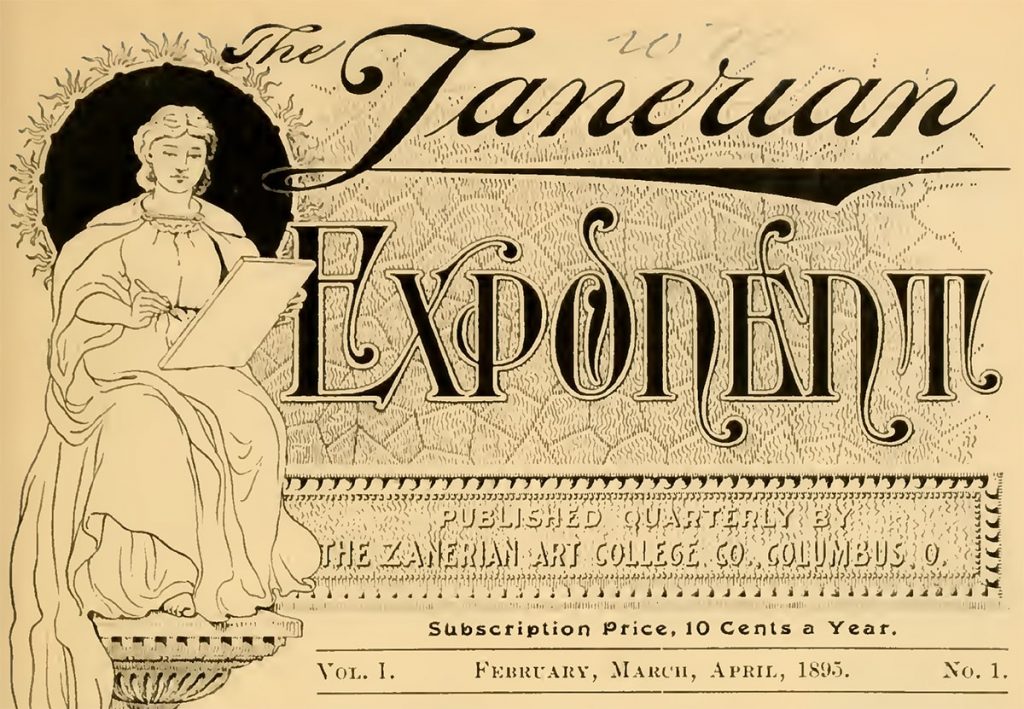
In 1895, Zaner published the first issue of The Zanerian Exponent, the journal that later became known as the Business Educator. The name was changed multiple times, so for simplicity I’ll call it “Zaner’s journal”.
The first 4 volumes of Zaner’s journal are available as a single PDF on archive.org. Recently, I read through these early issues and compiled the highlights.
What Can the Zanerian Do for You?
In the early years, Zaner’s journal was primarily used to recruit students to the Zanerian Art College.
The first volume of the journal featured multiple examples of work by Zanerian students. Each work included a small example of the student’s artistic skill before entering the college and a full page, professional design showing what they had learned.

This testimonial by Mr. Bear was likely persuasive to the readers of the journal that were considering attending the Zanerian. It shows the transformation of Mr. Bear’s skill while at the Zanerian and indicates that he is now employed at Caton’s National Business College.
Zaner’s Beef with Arm Movement Purists and Traditional Script
In the early years of his journal, Zaner was extremely progressive in regards to practical penmanship. His primary concern was a simplified script that was easy to read and write. In multiple essays, he attacks pure arm movement, beauty in business script, and overly slanted writing. In fact, during this time Zaner was leading the movement in “Vertical Writing”, which was script that slanted at 90 degrees with a tolerance of 10 degrees in either direction.
The four essays below will get you acclimated with Zaner’s progressive approach to practical penmanship during this time period.
Simple, Sensible Writing
The early issues of Zaner’s journal featured many specimens of practical penmanship by Zanerian students and faculty. Here are a few specimens that stood out to me.


The Sweethearts of a Scribe by Still A. Scribbler
In attempt to reinforce the merits of simple writing, a four-part series titled, “The Sweethearts of a Scribe” was published. The series is supposedly written by Still A. Scribbler, a young penman enamored with beautiful, speedy penmanship made with arm movement. Time and time again, Mr. Scribbler is let down by his sweethearts, until he finds his eternal soulmate:

Click here to read the four-part series.
What About Ornamental Penmanship?
Zaner’s journal was primarily focused on teaching and promoting practical penmanship, therefore it wasn’t filled with specimens of ornamental writing. That said, ornamental script made its way into every issue. Below are some of my favorite specimens.


The Benefits Derived from Sketching
The early issues of Zaner’s journal feature a number of essays about the importance of sketching. Here are a few of the essays worth reading.
In addition to essays about drawing, there are a number of pen and pencil sketches featured throughout the issues of Zaner’s journal. Here are a couple of my favorites.


Portraiture: A Rare Zanerian Publication
Starting with Volume 2, Number 4, the journal began to feature portraits to promote an upcoming publication titled, “Portraiture”. Portraiture was published by Zaner in 1897 and was a manual for portrait illustration.


The publication of portraits was a subtle way to generate interest in the subject and sales of the book. Of course, there were direct advertisements featured as well.
Click here to see an advertisement for Portraiture (Volume 3, Number 3)
You can download a copy of Portraiture here.
Lessons in Flourishing, Drawing, Writing, Lettering, and Roundhand
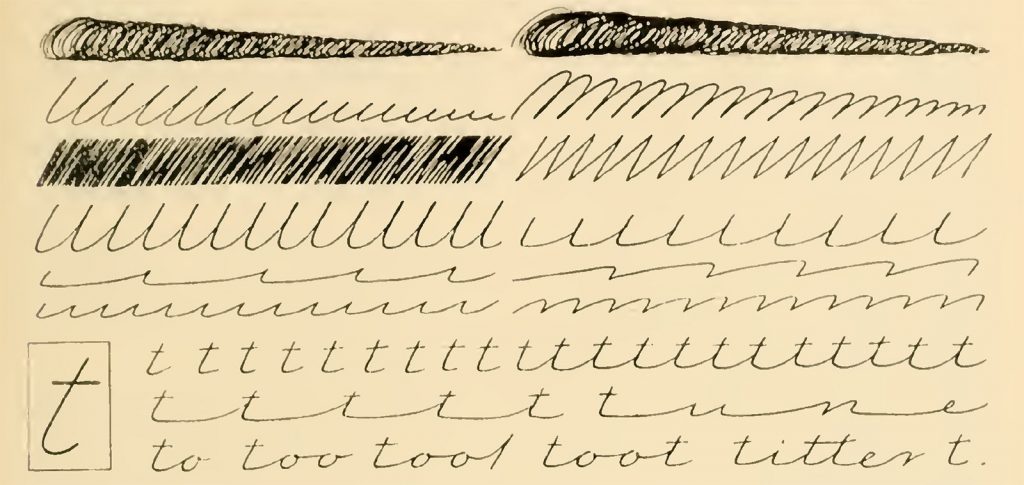
The early years of Zaner’s journal featured four-part lessons on the basic subjects of penmanship. I’ve compiled each series into a PDF for easy reading.
- Lessons in Flourishing
- Lessons in Freehand Drawing
- Lessons in Simple, Sensible Writing
- Lessons in Practical Lettering
- Lessons in Roundhand Penmanship
Inside the Zanerian Art College
In the early years of the journal, significant portions of each issue were dedicated to information about Zanerian student life, the curriculum, and the logistics of attending the College.
In Volume 3, Number 2, the following photograph of the Zanerian class from July, 1897 was printed.

In Volume 4, Number 4, sketches of Zaner, Bloser, and various Zanerian students were printed.


Who is the Best Penman?
I’ll leave you with an essay titled, “Who is the Best Penman?”. While the essay predictably leaves the question open-ended, it’s hard to find anyone in history that did more for penmanship than Professor Zaner.
Click here to read “Who is the Best Penman?”.

This relatively long blog post only scratches the surface of what the early issues of Zaner’s journal have to offer. If you’re a fan of Zaner, consider downloading all 16 issues from archive.org and reading them yourself.